International Military Tribunal for the Far East
Overview
For the Tokyo War Crimes Trial, eleven countries collaborated to create the International Military Tribunal of the Far East (IMTFE) on the 29th of April, 1946 in order to prosecute and try the leaders of Japan for joint conspiracy and wage war. The Tokyo Trial, much like the Nuremberg Trials, aimed to create a framework of international law intended to foster a safer world. The trial undeniably exposed, more vividly than any other event, the complex tensions that defined postwar Asia. On September 11, General Douglas MacArthur, the Supreme Allied Commander in the Pacific, ordered the arrest of forty individuals accused of war crimes. The most significant among them was Tojo Hideki, who had served as Japan’s prime minister for the majority of World War II.
A team of US soldiers were on duty to arrest Tojo, and after hearing a gunshot from inside, they forced their way in. Inside, they found Tojo still standing, a pistol in hand, blood soaking through his white shirt. The soldiers rushed him to a military hospital, where he hovered between life and death for several hours before ultimately surviving. He left what he intended as a final statement: “I would not like to be judged in front of a conqueror’s court. I wait for the righteous judgment of history.”
On December 26, 1947, came the moment in the trial that many had been waiting for: Tojo Hideki, the most famous defendant on trial, took the stand due to his role in leading Japan into war and overseeing numerous wartime atrocities, including crimes against peace and humanity (e.g. the attack on Pearl Harbor).
A Time magazine reporter said he testified “with the cold assurance of a conquering samurai.” Tojo was unapologetic. He insisted that the war was necessary. His only regret was losing it. “I will contend to the last that it was a war of self-defense,” he said. Asked whether he was made the decision to bomb Pearl Harbor, Tojo replied, “Yes, I am responsible.” For the most part, Tojo stood his ground during the days of cross-examination and many western observers viewed his testimony as “a complete fiasco” for the Allies.
Topics
Tokyo War Crimes Trial
Assigned Journalist
 T.B.A.
Chairpersons

Nicoleta Mihoci
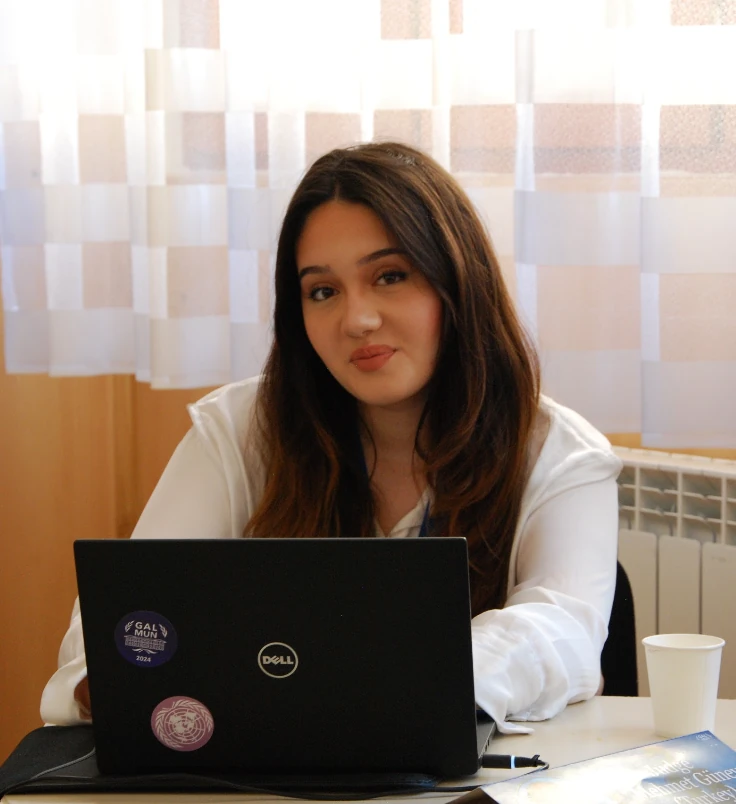
Greetings delegates! My name is Nicoleta Mihoci, and I am a student at “ Vasile Alecsandri “ National College. For the XXth edition of GalMUN conference, I have the honour of being one of your chairpersons alongside Ioana. MUN’s are a thrilling opportunity to not only practice and improve your public speaking but also meet incredible new people! Court committees have won my heart ever since last edition’s ICC committee, as its flow and excitement is incomparable. With that being said, I can not wait to meet all of you in May!Ioana Pricop
Hello prospective delegates! My name is Pricop Ioana and I am a junior in highschool at “Colegiul National Vasile Alecsandri” Galati. I look forward to meeting all of you and I promise you to create a comfortable and welcoming experience at this committee alongside my colleague. I am a person who takes great interest in law, history, politics and economics, and MUNs have helped me acquire more knowledge in these domains. My MUN journey started freshman year, as a delegate, and now I have the honour to participate to GALMUN as a chairperson. If I were to give a piece of advice to first timers would be to not be afraid to speak up, as no idea you want to present will be overlooked!